
Spartacus helps people do good things together, and actually finish them.
Most good ideas fail for one simple reason: people don’t want to go first. You might want to help your community, build something useful, or fix a problem you see every day. But doing it alone feels risky, awkward, and overwhelming. So nothing happens.
Economists have studied this for decades. When people act alone, effort feels wasted. When people know others are committed too, action becomes possible.
So, Spartacus is like a Kickstarter for doing good.
We design choice architecture that makes cooperation easier and freeloading harder. We align incentives so action only activates when enough people commit. We remove the loneliness and risk that stop good ideas from becoming real.
In plain English: Projects only go live when there is real buy-in. No false starts. No empty promises .
No one acts alone.
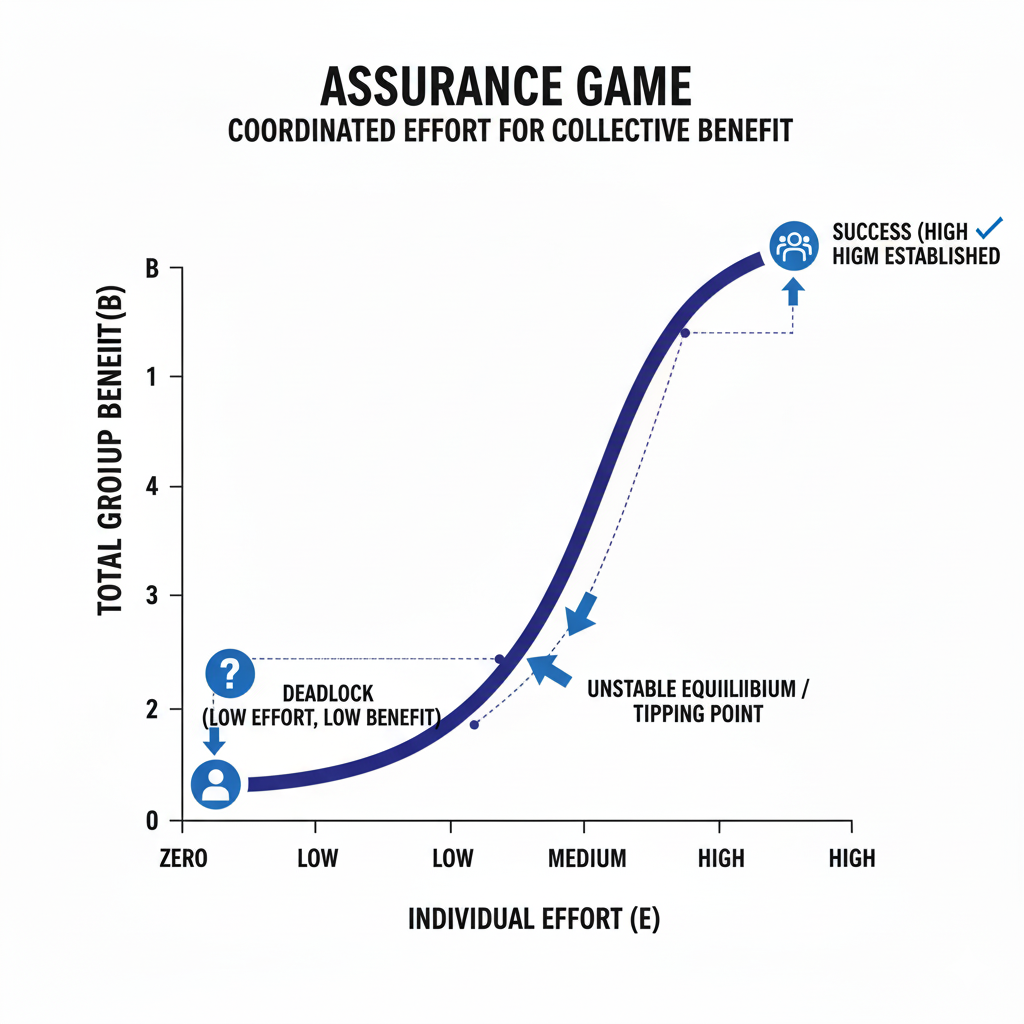
This chart plots Individual Effort against Total Group Benefit. It usually shows two stable points:
- The Deadlock: Where everyone provides zero effort because they expect zero from others.
- The Success: where everyone provides high effort because they trust others will too.
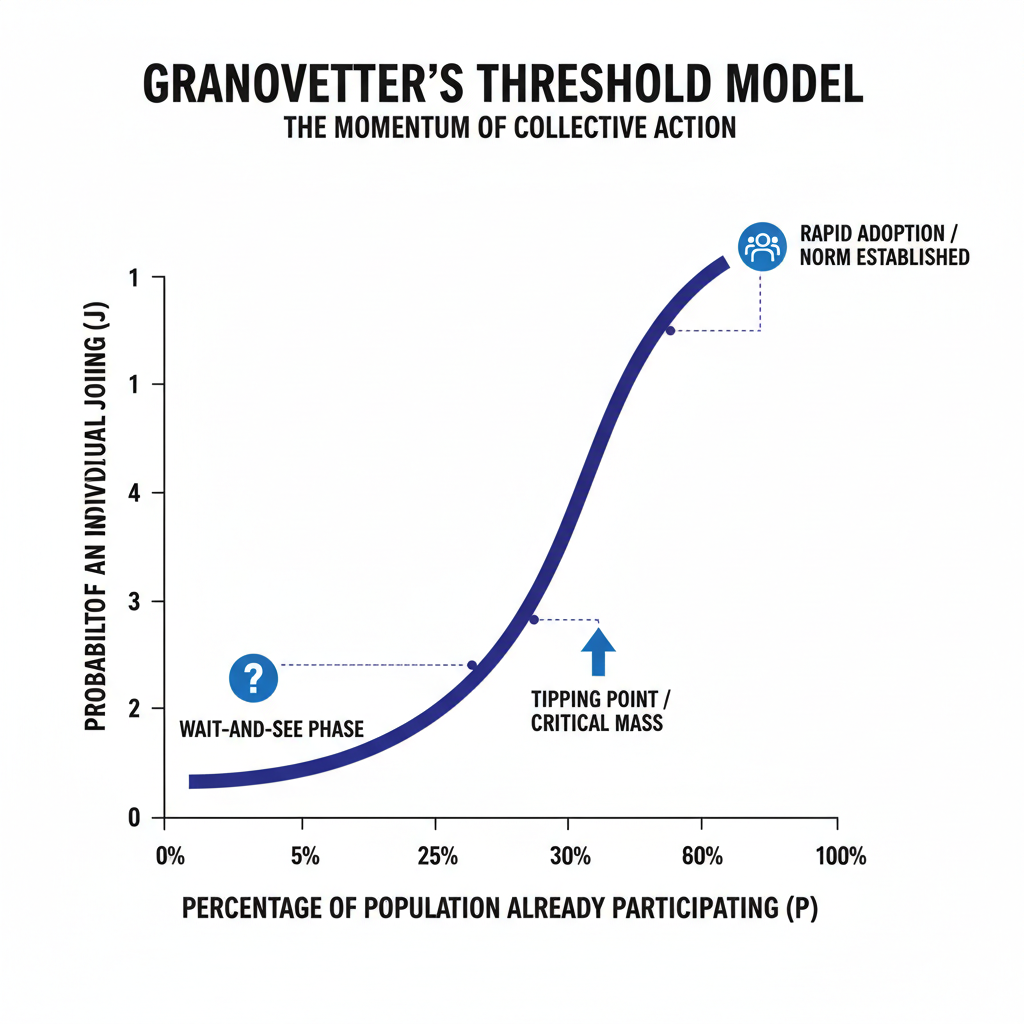
Sociologist Mark Granovetter’s Threshold Model is perfect for showing why "nothing happens" until a tipping point is reached. It plots the number of participants against the probability that a new person will join. The bottom of the curve is where "no one wants to go first." Once a small group (innovators) starts, the perceived risk drops. The curve shoots upward as it becomes "safer" to join than to stay out.
In 2024, Spartacus received a ACX Grant, supporting its development.
It’s given to a small number of projects each year that demonstrate:
• strong underlying ideas
• thoughtful use of economic and behavioral research
• real potential to solve hard, real-world problems (our whole thing!)
Spartacus was selected because it applies serious thinking, from economics, game theory, and behavioral science, to a very practical challenge: helping people follow through together.
For families, this matters because it means:
• the platform is grounded in research, not trends
• the idea has been independently vetted
• development is being taken seriously
Spartacus is built using ideas from behavioral economics and game theory, translated into software.
It makes doing the right thing easier. It removes anxiety. It rewards putting yourself out there.
Instead of “I’ll do it if I feel like it,” the system becomes:
“I’ll do it if we’re doing it together.”
That shift is powerful. It changes "maybe" into "yes."